Thriving Mindfully

Tag: perspective (Page 10 of 17)

On the paradox in wishing for a long life

Who doesn’t want to live a long life !
Everyone wishes for as many trips around the sun as possible in their lifetime.
In India, when elders bless younger people, they usually pray for them to have a life lasting aeons.

But what exactly does more years in one’s life add to?
Does more years translate to more meaning?
Does it also not imply a longer old age full of decay and suffering?

I feel that we should reimagine our conception of a lifetime.

How about thinking of age in terms of time and not years.

Let me explain what I mean by this.

Remember Eisntein, the fuzzy haired genius?
Once, one of his students asked him to explain the concept of relativity in simple language.

Here’s what Eisntein said,

‘When you sit with a nice girl for two hours, you think it’s only a minute,
But when you sit on a hot stove for a minute, you think it’s two hours.
That’s relativity.’

Such elegant simplification!
The jest of a genius.

The way we sense our time on this beautiful blue dot is also a function of relativity.
A life full of unwise choices can seem to be an agonisingly long drag.
Just like a macrocosm of a boring lecture in college. An abyss with no apparent end.

On the other hand, a life full of wise choices, purpose and meaning would feel like a breeze.
A macrocosm of an hour with your favourite playmate when you were a toddler.
You never realised when time passed, since you were so involved in enjoying each moment, weren’t you?

But here lies the paradox.

The inherent paradox in our wish is that we want a long and meaningful life.
Because long and meaningful don’t go together.

If you are living a meaningful life, then life would pass so easily that you never realise when the years flew by, just like hours fly by when you’re with someone you love.
Life would seem to have finished in a moment.

But if you feel that life is long, it just means that life is seeming long to you, maybe because for you, it isn’t so much fun to be alive !
For if you truly enjoy something, time would feel to have passed in a jiffy !

It is best to live in terms of time and not years.

Rather than wishing for a long life, we should wish for a life that just passes by, for it would mean that we truly enjoyed each moment in it.

And the best way to get that experience is by being in love,
With life itself.

Clocks and calendars aside,
I wish you a meaningful life.

What else does one need in life after all !

A sermon from my 5 year old teacher

I’d come to visit the reforestation community I had volunteered at for much of last two years.
Incidentally, since it was also the place where I had started my bicycle trip, I felt the need to visit again to get a sense of closure to this incredible journey I’d been on.

One of the special aspects about this community is the concept of Unschooling or ‘Nature led learning’.

The kids as well as adults seek to learn and grow by interacting with the environment around them, guided by the compass of their curiosity.

While I was volunteering here, the most profound lessons I learned came from the kids in the community.
It was always such a joy to gain perspective from children who were just being, learning, growing and evolving as a function of their environment.

So yesterday, when I sat down to have breakfast in the morning with all our community members, I got a wonderful surprise snuggled up in another volunteer’s lap.
It was one my little teachers, Rahaphaello. A five year old bundle of joy we all kindly called Rafi.

I was happy to know that he had stayed through my eight month absence in the community.

At first, he gingerly observed me from a distance, as if trying to place me in his mind. It had been a while since I was away after all.

Slowly he walked towards me to get a closer look. With each onward step, his memory jogged him to fond memories and soon enough he came close and held me in an affectionate embrace.

He had grown taller and heavier in these eight months. His eyes shone as brightly as I have always know.

His eyes were gazing deeply into mine, as if casting a spell that needed cooperation from both of us.

‘You know what I see in your eyes?’ he asked.

‘You tell me Rafi, what do you see in my eyes?’

‘In your eyes….
It’s …it’s…round ..like the earth,
I can see the whole world in your eyes!’

Still in my arms, with a gaze transfixed,
And with all the love that could ever be found, he looked at the world he saw in my eyes.

‘You know what I see in your eyes Rafi?’

‘What?’

‘It is a big star, very very big….
And it’s shining bright…
Maybe it’s many stars..
Could it be a galaxy of stars?
Or could it be the whole universe?’

‘The whole universe?’

‘Yes, yes , the whole universe, right when it all began, with a beautiful big bang.’

‘Oh really? I want to see my eyes then ! ‘ he said excitedly and ran towards a mirror.

And like many of the lessons he taught me without knowing, it ended at the threshold of his attention span.
It was a habit of his,
Of leaving you in deep thought as he jumped away to another context he fancied in his surroundings in that moment.

—-

Nihilistic thoughts often flirt in our mind.
‘What is the point of it all ?’ one often wonders.
‘We are just a speck of startdust in the grand scheme of things and nothing really matters.’

But it takes the wisdom of a child to make one realise that even in the speck of an eye, in the speck of an insignificant being one is,
Dwells the blueprint of the whole universe,
Of creation itself.

Even in such a momentary happenstance of our existence in the grand sceme of the cosmos,
There are the answers, to all the mysetry, all the magic there is.

How easily did Rafi teach us all,
That the secret to an ever fansinated consciousness, like that of a child’s, is accessible to us all if we choose to find magic in what we relegate as mundane !

That maybe the meaning of life,
After all,
Is to realize that the universe is undeniably,
within you.

A Diwali in true spirit

It was the eve of diwali. A celebratory joy had taken over the little hillside village of Jyotigram.

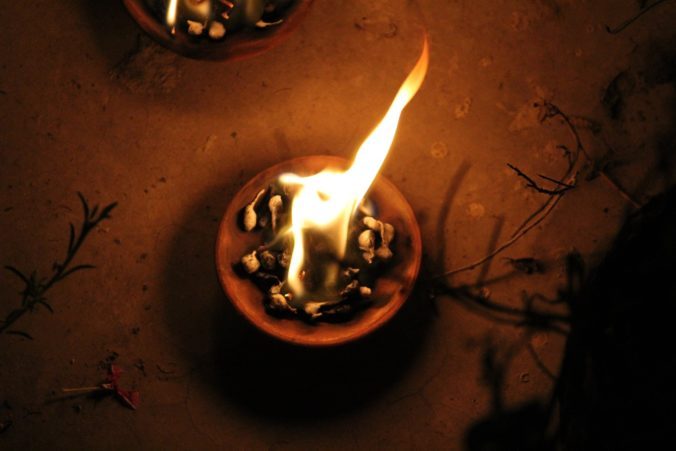
With the advent of the evening, the villagers started lighting up earthen lamps in their homes.
Within half an hour, the whole village had a luminous aura around it.
It was a sight to behold.

Even with the sun setting, darkness could not envelop the village. The flickering flames of the hundreds of earthen lamps kept darkness at bay.

Looking over the village from the little hillock was a young boy named Aadi.
He had worn simple clothes, quite unlike the villagers who had worn their best dresses for diwali.
He had a cloth sack hanging across his shoulders.
And even though he looked modest in his appearance, his eyes shone bright as a full moon on a clear night.

‘What are you doing here son?’ asked a silhouette in the dark.

It was an elderly man called Harish, a photographer from the city who’d come to village to capture the festivity of Diwali.

Aadi recognized him. He had seen the man come to the village a couple of days ago with his camera.

‘I am just enjoying the view of my village all lit up on the eve of Diwali. Isn’t it beautiful?

‘Yes indeed ! It is a breathtaking view from this hillock. As if the villagers have won over the darkness of the night with the light of all the lamps!’ said Harish.

‘Just how we celebrate the victory of good over evil, knowledge over ignorance on this day.’

Aadi didn’t look anywhere else but at the village the whole while as he talked. He seemed happily transfixed by the luminous aura of his village.

‘Are you not celebrating Diwali?’ asked the old man.

Aadi turned around breaking his gaze.

‘In a way I already celebrated it, but in a way I didn’t!’

The answer perplexed Harish.

‘So you lit up a lamp at home and came up to the hill to look at the village is it?’

Aadi looked at Harish lovingly and said,

‘I am a poor village boy Uncle. I cannot afford to buy oil to light up a lamp. Neither do I have the means to buy a gift for my friends nor the ability to make sweets for neighbors.’

Harish felt a sense of guilt, to have made the boy realise his penury on a day of celebration and festivity.

‘I’m sorry to know that my friend.’

‘Ah you don’t have to be sorry. I never pitied myself for my poverty.’

‘But you said you also celebrated Diwali in a way. Would you tell me how you did?’ asked Harish.

‘A month ago, I realised I would not have the means to celebrate Diwali.
So I went to the river bank and sat down to pacify my sombre self.
But then I saw all the heaps of clay on the banks of the river.
And I knew what I had to do to make things better.
I started making earthen lamps with that clay and left them to dry in the sun.
I worked hard night and day and managed to make enough lamps for every household in our small village.
I couldn’t afford oil, but I made the lamps that could contain the oil that would fuel the flame.
Those lamps were my gift to my villagers.
And the sweetness of this sight from the hilltop of all these earthen lamps I made is better than anything I’ve ever tasted. That’s my Diwali.’

There was a majestic delight in his shining eyes as he shared this.

Harish felt as if he’d gotten the best gift he could have gotten on the eve of Diwali.
The gift of perspective.

Both Harish and Aadi looked at the luminous village in awe.
It was a beautiful sight.

Harish clicked a picture of the radiant village from the hilltop.

He gently placed the picture in Aadi’s palm.

Aadi smiled as he looked at the wonderfully shot image. His eyes shone even brighter than the lights of the whole village.

‘A gift for you’ said Harish smilingly.

Aadi slid the picture in his cloth bag. He pulled out an earthen lamp he’d made from the river bed clay and placed it on Harish’s palm.

‘Happy Diwali’ he wished.

Both Harish and Aadi basked in the gentle glow of the village’s luminous aura.
Cherishing a gift unexpected,
A picture and and earthen lamp,
Either of them realised deep inside,
that this was a Happy Diwali indeed.

The meaning of life as revealed by a tree

In the woods I stood, facing a friend
A tree
Whose life was breathing poetry

I had a question
And it knew,
‘Ask’, it said
To the wind as it blew

Cur Hic Statis‘, my friend my dear,
Why is it, that you stand here?

Gently it smiled, content in its being,
Revealing an answer in what I was seeing.

‘Even when I was a seed’ said the tree
‘I believed in all that I could ever be
Buried in soil, I couldn’t hear, not see
But Give and Grow was mother nature’s decree.’

And when I was a sapling, I aimed for the sky
Not doubtful about how and why
The sun was the compass, the aim was high
I had to blossom, I had to grow,
Else life would be a lie.

I realised from the day I was sown,
The need for water was much bigger than my own
So, each leaf and petal, through pleasure and pain
Sang hymns to the wind and summoned rain.

Restful yet restless, with no time to bide
My nature, as nature’s is to provide
Through ups and downs, in the season’s tow
Sometimes fast, at times slow,
But never do I stop to grow.

Droughts and passing storms give an advice sound,
Be humble and have feet firmly on the ground
And even if I cannot move helter-skelter
For those who can, I give shade and shelter.

WORK, I know not, I only know BEING
How could living be of any other kind?
After all, it’s a matter of choosing and believing,
The world is a projection of your mind.

Cur hic statis
‘Why do you stand here’ you ask
As the end comes close by the hour

I REALIZE, I BE
I’m a hundred trees,
A million fruit,
A billion flower.

And,
A fruit lands in my lap, breaking my reverie,
I REALIZE,
I UNDERSTAND,
What I could be.

I eat the fruit and plant the seed
As I journey on,
To become a tree.

A story from a Sewer

It is early in the morning. Leela and her daughter Sita are preparing breakfast for their family of 5.
They live in a shanty that looks no different from the hundreds of other houses in their ghetto that dots the railway line.

Sita’s two younger brothers are still asleep. Her father Suresh is getting ready work.
Work that he finds despicable, but submits to nevertheless for his fate was sealed the day he was born in a Dalit family.

Dalits are a section of the Indian society that finds itself at the bottom of the Hindu Caste hierarchy. For hundreds of years, they have been treated as untouchables, destined to do all the lowly tasks in the society.

As much as Suresh can trace back his ancestry, all of his forefathers were manual scavengers, people who take care of the human waste santation of their community.

Even in the modern era of technology, urban sanitation is still dependent on people like Suresh climbing down the sewers to manually get rid of decaying human excrement.
It is a thankless job which people from lower castes still do mostly because the society has destined them to never rise above this age old practice.

This is a means of survival, with both feet sinking slowly in marshy sewage every Single workday.
He works with no job guarantee, irregular pay, no safety equipment and worst of all with no hope.

Deaths are common in this ‘profession’, if you will. And 9 out of 10 manual scavengers do not make past the age of 60 because of constant exposure to toxic gases in the sewer lines.

The only way to cope with the work environment is alcohol. Maybe this is the only job in the world where the person must show up drunk to go on with the work.

———

Sita brings two flatbreads and some curry for her father. Each morsel is punctuated by a generous gulp of the locally brewed liquor.

Hurriedly he leaves for work after his meal.
The two boys awaken to the sound of a bicycle bell. Their 4 year old friend Harish is on the doorstep with his new bicycle.

Harish’s father was Suresh’s work mate. He passed away a month ago in a sewer after exposure to toxic fumes.
It was an tragedy that took no one by surprise.
Perhaps the worst of tragedies is when a tragedy becomes a norm.

There was no hope of any help for orphaned Harish and his mother.
By the grace of a kind person who reported the incident on social media,
People pooled in money to help the family. A corpus of 30 lakhs was collected which now is a fixed deposit in the name of Harish. The interest on the amount pays for his education and household expenses.
He also got a bicycle his father had promised on his birthday.

The demise of his father in a way, brought much needed financial relief to the family.
Of course, this is an exception than a norm.
Not a day passes without a sewage worker succumbing in the chamber of death.
Nobody cares.
The government, even less than God.

But the ring of Harish’s bicycle bell gives some people hope that if the goverment offers a deaf ear, maybe compassionate citizens will help in the case of a loss.

It is better than having no hope at all.

Leela calls Harish in and all the kids line up for breakfast.
She can’t help but think how different the lives of her kids is going to be as compared to Harish’s.

‘Would she ever be able to give access to good education to her children and hope that they become the first generation in their family to not be a sewage worker?’ she wonders.

In Indian culture, the wife wishes a long life upon her husband.
But could Leela ever wish for that, when she knows that her husband would never live beyond 60.
The sludge in the sewer is quicksand, destined to engulf all lives that set foot in it.

In a fair world, she would wish life on her husband,
But today, seeing little Harish and her kids side by side,

Crushed in her soul, she hopes her husband doesn’t return from work.

Life has never been fair.

Maybe,
A death would do them all better.

What a half marathon taught me about cultivating lasting friendships

It’s a matter of great privilege to have an enduring friendship. Even more so, when you can still do things together with the same friends who you grew up with.

I feel fortunate on that regard. I still have my childhood friends around who are proactive and find ways to do things together.

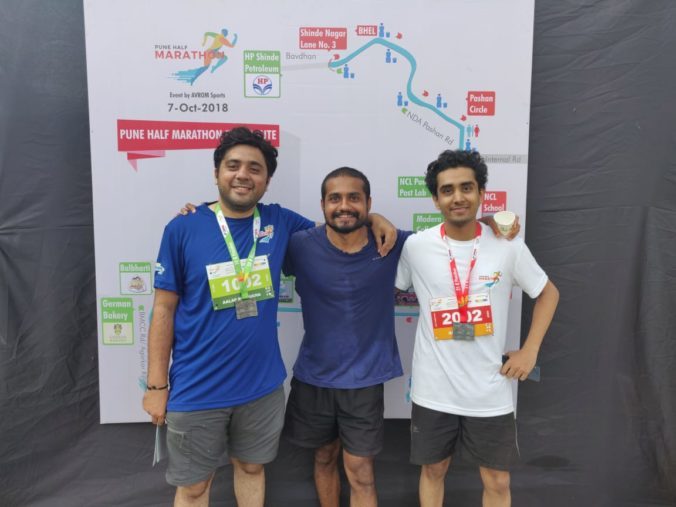
Recently, two of my friends and I decided to participate in a running event. One of them and myself were participating in a half marathon and the other hand chosen a 10 kilometer run.

I was apprehensive about my ability to run such a long distance, as were my friends, but since we were all in the challenge together, it made things easier on some level.

But there was one hang up we faced four days before the run. My friends had already registered for the event and I, because of my indecision and procrastination, hadn’t enrolled yet.
On checking the website, we came to know that the event was sold out and I couldn’t officially be part of the run.

It was a bit disappointing to us all.
We wanted to do this together.
But fate seemed to have other plans.

So did I.

The night before the run, I told my friends that I was going to run as well. I would run from home at the same time they start at the official start line, and run the half marathon distance as planned. So even if I would not be running on the same path as them, I would be running at the same time on the streets of the same city.
They happily agreed to the idea.

At 5:30 am the next morning, we all started to run together, on our own paths, in our own realities.
I ran about alone in the city with an app on my phone telling me about my progress with each kilometer.

Once I was past my 7 km mark, I took a turn on the road that coincided with the official race path!

I took a little detour and timed my run such that the distance I had covered coincided with that of other participants at the 11km mark on the racetrack.

And once I reached the 11km mark, I was on par with other runners on the official path to the finish line.

That felt magical, to be running on the official track out of pure chance!

Having other runners run alongside helped me with pushing myself in the later half of the race. I didn’t have a bib number attached on my chest as others but I was a runner just the same.

At the 17 kilometer mark, I saw a runner from behind who I could recognise anyday out of a huge crowd.

It was my friend !

He seemed to be having some trouble during the run. He looked tired and was walking for a brief stretch.

But I believed he could do much better. I breezed past him on the track and patted him on the back.
The surprise of finding me on the official racetrack filled him with great joy.
A sudden rush of energy took over him.

From that point on, he raced onward with all his might running past me within a kilometer.

I was happy to see him go full throttle as he blended in with other runners beyond my sight.

Eventually, we ended the race at the official finishing spot, relishing each other’s achievement and the togetherness that came along with it.

In that moment of celebration past the finish line, I also found a great lesson about friendship and the paths we take in our life.

In life, past a certain age, all our friends take different paths in our lives. Part of it is voluntary and a part out of pure chance.
And often, we feel distant and disillusioned by the notion of an enduring friendship.

But we need to realise that at some point in our lives, our path will diverge from the ones each of our friends take.

We still need to keep running on our own paths, forever trusting in our self and the connection we share with people who we believe in.

At some point, sooner or later, our paths will coincide, for all path lead to the same end, if followed with courage and complete honesty.

We all have to, at our own pace, persevere, and keep on running on our own path with faith that’s complete and unwavering.

And if we tread the path of our own choosing in our lives and go all the way,
We are bound to find the confluence we’ve always longed for,
With the people we have always loved.

So, is there a reason to feel sad when our paths diverge with that of the people we love?

No.

As long as they are true in their heart for their pursuit and you are in your own,
And you both persevere,
You will always find each other when your paths meet,
Forever happy with each other’s growth.

Tread with faith
And persevere.
The friendship will endure.

It’s only a matter of time.

What can we learn from a kid waving a train goodbye?

A window seat on a train ride.
Feels like such a luxury doesn’t it?
Why wouldn’t it,
For it offers a unique cinematic experience after all.
The landscape is neither static nor moving too fast like in a motion picture.
It breezes at a pace that’s easy on the eye, offering enough mind space to dwell on worlds within and without.

Recently, I had the fortune of having a window seat on a train ride from Kolkata to Pune. Much to my disappointment, it had air conditioning in all of its coaches.
An air conditioned coach doesn’t offer the same experience as a sleeper class open window. No gush of wind messing up your hair, no influence of outside weather on the inside, no hawkers, certainly not as much fun.
It is quite a sterile environment, an AC coach.
But I still had a window seat.
I couldn’t complain !

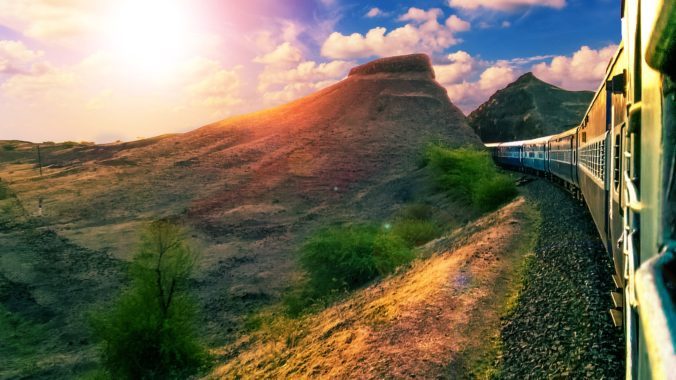
Sometime in the afternoon, I found myself looking at the landscape of central India through the tinted window.
The train chugged by a little agrarian hamlet.
Amid the vedant rice fields, I saw a mud house where a group of little girls were playing.
As they saw the train passing by, they all took a break from their play and started waving at the train in sheer jubilance.
The buoyancy in their being lifted my spirits. I couldn’t help but smile and wave back.

But then, I realised,

‘These are tinted windows ! I can see the girls but the girls can surely not see me wave back at them !’

But did it make a difference to their enthusiasm?

The girls would never know who they are waving goodbye to, or if they were waved back at.
They smiled and greeted strangers nevertheless.

And did I not smile? Sure I did,
As many other passengers must have, at the sight of their effervescent energy.
That’s a child’s karma.

A child’s mind has a primeval consciousness.
It willingly gives energy to people and places around it. At some level, it understands that the energy will come back in much bigger a bulk.
It is unsullied by the transactional, quid pro quo paradigm adults dwell in.

For an adult, it is easy to feel lost, isolated and self centered in his being.

‘Why should I even do something if I don’t see a benefit on the horizon, a profit of some sort?’ one wonders.
Growing up, we become used to doing something for something in return.

Our mindset about work is best reflected in our conversations. The most common questions we ask one another as adults are,

‘What do you do?’

and

‘How much do you make?’

The answer to the latter is much based on the judgement of the answer to the former question.
Usually, the reply is in terms of one’s occupation and income respectively.

But maybe we need to do the asking a bit differently.
Maybe should ask each other and our self,

‘What do you love to do?’

And

‘How much do you give?’

You would wonder,
‘How does this relate to the little girls waving a train goodbye?’

At that moment, when the girls are waving, they are doing what they love to do, in accordance to their natural instinct.

And what are they giving?

Many smiles to people who they would never know.
However little, however fleeting it may be,
They add value.

Now,
What can we learn from them?

Foremost,
To involve our self in the most natural extension of our being,
By doing things we love to do.

And,

To give unconditionally, with utmost joy,
Without expectations.

It they can, deep in their hearts, find such happiness in giving,
Can’t we?

It is not easy to shift our perspective as an adult and start to give our energy without knowing what result it would yield, or what benefit we will get as a result.

Well, we can all start simple.

How about starting with waving goodbye to a train we will never see again?

Yes, you will feel awkward,
And to lift that hand would need overcoming inertia we didn’t know to exist.

But after the train has passed,
If we find our self smiling,
We would have learnt a lesson.

The secret to finding sweet fruit

It was my last evening in Thimpu, Bhutan. Wandering through the market, I wondered what I should get as a souvenir from Bhutan for memory.
After wandering about in the little marketplace, I found a few shops selling fruits.
I had read that most of Bhutan’s agricultural produce is organic. I wondered how fruit in this country would taste like. My love for fruit steered me into one of these shops.

The fruit was nearly arranged in wooden cartons. I didn’t have a lot to choose from the local fruit since much of it was imported from India. On asking the shopkeeper, I got to know that only the Apples and Plums were the locally grown fruit in the shop.
The plums were smaller and much rosier than the ones grown in India.
I decided to get a bagful for myself as an edible souvenir.

At night after dinner, I chose to eat one of the plums as dessert.
However, much unlike a sweet tasting dessert, it had a strong tart flavor. I ate another one to try my luck, but it tasted the same as the one earlier. I packed away the rest of the plums in a bag.
Maybe they need to ripen more, I wondered.

The next day, I was on a shared taxi ride to Phuentsholing, a bordering town one has to cross to enter India. The ride on the highway was pleasant for a couple of hours.
But then, the driver decided to take a short cut to save time.

Within ten minutes of hitting that bumpy shortcut road, we hit a gridlock. A huge lorry had gotten stuck on the narrow road blocking the entire path.
We had to alight and wait for a JCB truck to arrive and pull out the truck stuck on the way.
All my fellow passengers were local Bhutanese. There was a little boy in tow of a mother, two farmer women, and a couple of youth along with us on the ride.

I could sense that the little boy was thristy. I looked around to find a Buddhist temple not very far away from where our car was.
I walked upto the temple and asked one of the novice monks if I could get some water. He happily agreed and guided me to a source of water.

I wondered how I could express my gratitude to the monk.
Then,
I remembered I had a bag of plums with me !
I opened my bag and offered a few to him. That was all I had that I could share with him.
He happily accepted it and waved me goodbye.

The road was still blocked.
I reached our taxi and offered water to the mother. Incidentally everyone in the car was thirsty. They all had their share of water and passed it around.
I still had a lot of plums left with me.
I offered two to each of the passengers.
The little boy was delighted at the sight of the fruit.
He savoured each nibble with complete involvement.

Looking at him enjoy the plum so much, I wondered if it was an acquired taste or was he hungry or had the plum ripened overnight?

I looked into my bag to find a solitary piece of fruit left inside. I took it in my hand and bit into it with hope.

Quite unlike last night’s tart flavour, my taste buds were engulfed by pulpy sweetness of that plum.
It was the dessert I was wanting to taste last night!

All my fellow passengers enjoyed the fruit just as much.

I wondered what made the fruit taste so sweet overnight.

Maybe it was the spirit of sharing.

How a Himalayan trek refined my Education about Veganism

It had been five hours since we started our trek downhill from Beding, a little hamlet in the Rolwaling valley in North-East Nepal.
Exhausted as we were, the sight of a house at a distance felt like spotting an Oasis.
Our determined feet stamped onward to reach the solitary house in a village called Dugong.

We could smell a local alcohol made out of rice called ‘Rakshi’ brewing in the kitchen.

‘Namaste, Ajool…’ my friend Lee greeted enthusiastically.

An elderly Sherpa lady stooped out of her house with the most welcoming smile I’ve ever been graced with.

She invited us into her kitchen-cum-restaurant.

We could see she only had two wood fired stoves with her with one brewing the ‘Rakshi’.

‘Khana Jaldi Chaiyo’ Lee explained with animation that we need food fast.

She laughed and pointed her finger towards a packet of noodles. I was sure she was used to the state of hunger of trekkers.

We assented at her suggestion and she got busy in her kitchen.

The house was made out of a lot of wood, labor and love. The cutlery, minimal and neatly arranged. There was water pipe delivering water right to her house straight from the little cascade behind her log cabin. The place had an energy of contentment, one that can only come with age, acceptance and wisdom.
There was a place for everything and everything was in its place.

After a moment, I wondered what this old lady would be doing for company. She only had one neighbour who seemed to be out for work in the forest.

‘She must surely feel lonely all by herself’ I wondered.

Within moments we heard the door of the kitchen being banged at. We wondered who it could be. The Sherpa lady’s face lit up with a smile. She reprimanded at the person at the door with unmistakable affection.

The determined banging continued on.
Finally she could no longer keep the door closed and lightly let it ajar.
And with the halo of the outside world behind itself, shone the bright white fur of a little baby sheep.

It jumped inside the kitchen and went straight to the lady. For the next half an hour, they played with each other like grandson and grandmother. There was such stubborn affection in the sheep for the lady, that it would never leave her alone. The lady would push it aside with loving aggression only to secretly expect it to come back to harass her.

Tumbling many pots and pans around the kitchen and eating out of places it shouldn’t, the baby sheep made itself feel at home.

The lady could only love the sheep more. There was no other way.

Once our meals were ready, she served us on the beautifully aged table made out of forest wood.
She rested herself on the ground, took the sheep in her lap and adoringly spoke to it in a language she was sure the sheep understood, only to not obey.

Just moments ago, I was feeling a bit sad for the woman who I assumed was living all by herself in this remote mountain village.
How wrong was I !
She had such a bountiful expression of life living alongside her.
The sheep was not just entertainment, or company or a means to have food, milk or leather for that matter.
It was life itself for her.

Witnessing this aspect of life changed my perspective profoundly.

A day ago, we were served Yak cheese with boiled potatoes in the village uphill. I was a bit hesitant while eating since I refrain from having animal products as much as possible.
But that was the only food available and we had to respect the emotion of the locals for whom Yak cheese is a delicacy reserved for special occasions.
We chose to eat what was served.

Much to my surprise, that was certainly one of the most delicious food combinations I had ever tasted.
I ate as much as I possibly could.
The next day, we saw free roaming Yak in the pastures nearby being milked lovingly by a village lady.

The Yak showed it’s affection back in equal measure, much like the baby sheep at the Sherpa lady’s house.

I felt fortunate for being able to witness this bond between humans and animals. I have lived in cities all my life and have never experienced this paradigm of a relationship.

A few years ago, I chose to follow a Vegan lifestyle, primarily educating myself from resources online about how cruel the animal rearing industry is.
My education happened mostly,
online.

But for the first time, I could actually see how effortlessly animals and humans exist symbiotically.
With sincere love for each other.
There was never a rope in sight to secure an animal, for their hearts were always strung together to their human friends’ hearts.
In harsh winter, the animals are taken care of by the local villagers like family. The village moves downhill to warmer places only when all its animals do.

In a way, it felt as if the animals took care of their human friends by giving them loving company, and perhaps a share of their milk.
Of course it can be disputed, and seen as exploitation.

I would argue like that earlier.

But once I saw the pristine relationship between man and animal in such harsh environment where weather and loneliness can take a toll on your health,
I realised the need for them to coexist in such beautiful harmony.

No animal is reared for meat in the villages here in the hills. And an animal’s death is mourned just as much as a family member’s.
Here, man chooses to be animal himself and treat another animal as family.

I turned Vegan thinking it would help end suffering, save the planet and create a peaceful world.
I still oppose commercial farming of animals.
But, this experience of witnessing symbiotic coexistence between man and animal has only made me realise my own animal self,
And how,
To understand our nature better, we need to spend time in nature.

While educating myself about veganism on my smartphone screen, all I could see was oppression and violence inflicted by us on animals.
I could feel a sense of guilt and hopelessness inside me for what we do to our fellow earthlings.

But out here in nature,
far away from the civilization I was brought up in, I could witness the animal side of us humans –
calm, compassionate and caring in the heart.
This education filled me with warmth, hope and optimism.

As I journey back to my life in the city,
A deeper understanding dawns upon me with each step,
About our true nature as a being,
The love we all have in our hearts,
And the way we should tread forward despite our conditioning,
Retaining the deep loving spirit that is part of us all.

Once we can do that, can we ever hurt any being?

Yak cheese tastes amazing by the way.
But what would feel inevitably better and worth experiencing is the gentle rub of a Yak’s fur on your shoulder on a windy winter morning.



A Calling

That fabled calling
I am afraid I haven’t heard it yet…

But nature,
Clever in its design
Didn’t give us the choice
To Un-hear

So,
Despite the din,
I wait
With patient ears,
Trusting the design
Of the Universe


« Older posts Newer posts »