Thriving Mindfully

Tag: perspective (Page 9 of 17)

Are you being a true friend?

The internet tells me I have more than a 1000 friends in the online ecosystem.
There’s a good chance that you share a similar story.

But how does one get to know who their real friends are? Not just among the friends in the online space, but also in their physical world?

I feel there is way to find the answer.
And the answer is in the questions they ask you.

Even if we have been friends with someone for a while, we can spend years not going beyond the same old questions-

How are you?’
‘What’s happening?’
‘How’s work?’

You know the list !

But amid the cacophony of the same old peripheral questions, there will be a friend who’s questions will pierce straight through your heart.

He’ll ask questions that compel you to come up with answers you already have, to questions you don’t.

What is your dream?’
‘What do you fear?’
‘Are you happy?’
‘Can I help?’

These are simple questions,
and they must be attended to.

These questions can only emanate from the heart of a true friend.

Who is a true friend you’d ask.

In my opinion, a true friend is someone to whom your growth matters just as much as their own.

You can be friends with hundreds of people, but if you want to be a true friend to a chosen few, you must ask these questions to them.

And time and again, in the interest of fostering meaningful growth,
To form a deeper personal bond,
One must ask these questions,
To himself.

So,
As a good friend,
May I ask,

‘What’s your dream?’
‘And what’s holding you back?’

And, coming back to the question,
Who’s a true friend?

The answer is in the questions they ask you.

I hope you find a friend in me,
A friend in you.


On slowing down time

An unexamined life is not worth living.’
-Socrates

Do you remember the last time you did something consistently, every single day?

No, I am not talking about the usual tasks like waking up, eating and sleeping.
I am talking about doing something that is a mindful choice that when repeated every day steers you towards betterment.

Something that’s physically, intellectually or emotionally challenging. Something that makes you act, and repeat, with a clear goal in mind, every single day?

There’s a good chance that you don’t remember doing something with such disciple and commitment.

Most of us do not have such a focussed outlook.

And as a result, we fail to examine where we stand and sense if we are improving over time.
Time passes all too quickly, without us having derived all that we could from it.

But there is a way to slow down time, and dwell in each day, and squeeze out most of what we can do with it.

I’d like to share a personal experience at this point.

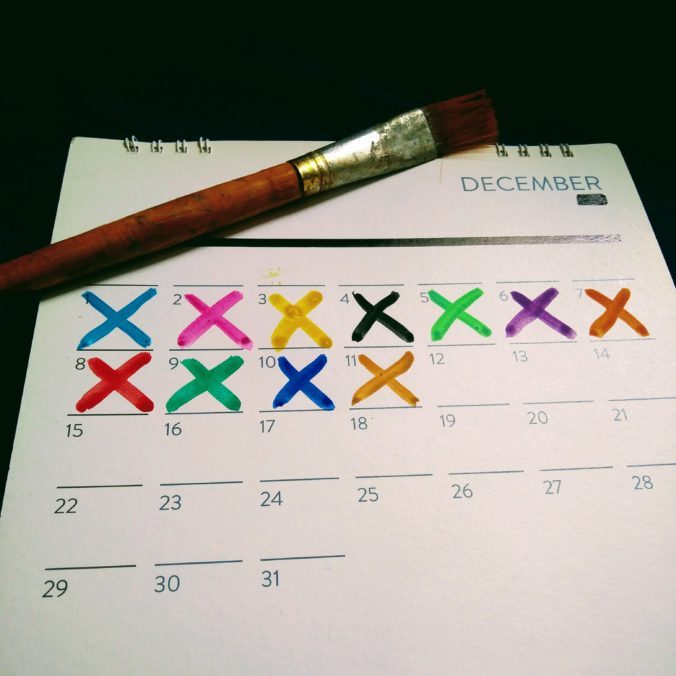
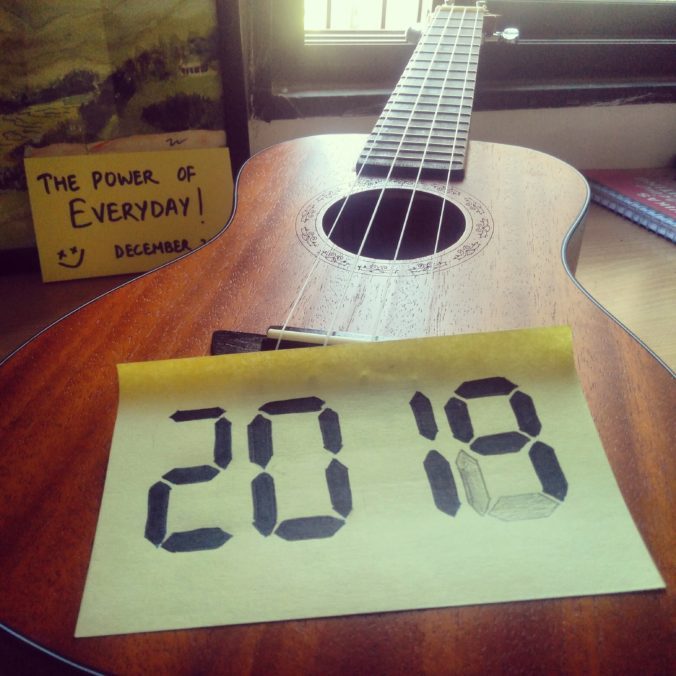
Ever since I started The Power Of Everyday project this month, I’ve seen a marked difference in my experience of the passage of time.

I have promised myself to write a blog post every single day.

A simple, easy to follow rule.

Once I started to do this everyday, the days have slowed down. It feels as if I’ve been writing every single day forever, while it has just been 11 days this month.
Even in a span of less than a fortnight I could sense an ocean of time.

While in the past, there have been times when I’ve not written and published for months yet, I would feel as if it hadn’t been long since I last wrote.
Time passed all too quickly without me having gotten much out of it.

I would definitely prefer an experience where I derive most out of my time. Wouldn’t you?

A mindful and deliberate act of disciplined creation helps one derive the most out of the continuum of time.

And hence helps one lead an examined life.

If you desire to experience this slowing down of time, to feel a sense of direction and discipline, promise yourself to do a simple task, every single day for a week.

It could be the simplest of the tasks.
But the rules have to be simple and well defined.

10 push-ups everyday for a week?
Reading one page everyday?
Or Writing a page in your journal ?

Take your pick as you like.

But try this one out.

A wise man once told me,

‘Time doesn’t move. We move through it. Time just stands still. Eternally.’

Maybe, by trying to do something every single day, mindfully and deliberately,
we can impede our flow through time,
And grow in ways that we absolutely must.

One thing. Every day. One week.

It’s worth a shot.


On letting art happen

It’s common to feel from time to time that you’ve lost your creative spunk, your muse has deserted you and all you mojo has withered away.

This feeling is as common as art itself.

You would feel that there’s nothing truly artistic coming from within you.

But does art ever come from within someone?

Perhaps that’s an egocentric way of looking at the process of creation.
And once we start to identify the art we create with our ego, it is easier to succumb to pitfalls of vanity or diffidence, as far on the spectrum of confidence they might be.

There’s another way of looking at the process of creation.

Maybe the art comes through you, and not from within you.

Maybe you are not a source, but a channel.

Maybe you are just a conducting wire that completes the circuit of creation,
And the art flows as a current through you, illuminating the world each time an idea materialises.

In such a case, you are just responsible of having a clear channel, with no distortion, resistance or roadblocks.

And the art will flow through you.

And you will be able to create without attachment, emancipated from the self worth you derive from the art you create.

You’re neither the battery nor the lightbulb.
You’re just the wire that connects the two.

Once you accept the  vastness of field of creative energy, and humble yourself to be nothing but a channel for the creative spirit, art will shine through.

In the end of the day, what’s more important?

To be an artist?
Or to make art?

Let’s strive to be a good channel in the circuit of creation, beyond our ego.

For once we let the muse breathe through us,
Wouldn’t each living moment undeniably be art?


Why your new year resolution should start today

This might catch you off guard.

It might feel that I’m posting something three weeks too soon.
It is not time to talk about new year resolutions yet, you’d say.

Be patient and hear me out on this one.

I’ve been trying to form positive habits for the past few years. After constant experimentation and many failures, I learnt about the two key elements that determine whether a positive habit will stick or not.

They are –

A) Consistency

B) Momentum

Now, we are all aware of how most new year resolutions fizzle out by the second week of January.

An obvious reasons is because we move into the new year with no momentum at all.

You can’t start going to gym every single day in a new year if you’re picking up from a week of partying towards the end of the year.
You’re just expecting yourself to start running before learning to crawl.

In my opinion, one needs to start the new year with momentum.
A momentum that starts to build at least three weeks before the new year.

Why three weeks?

Well, it is a well researched fact that I can attest with my own experience that it takes at least 21 days of consistent effort to form a new habit.

Whatever your new year resolution might be, if you start working on it from tomorrow, you’ll have 21 days to be consistent and build momentum so that you are already well primed for the changes you want to bring into your life next year.

This might have caught you off guard and you might not have even thought of a resolution yet.
But it’s a Sunday, and a good day to relax, reflect, and resolve what you’d like to improve on.

Once you decide on your resolution, start tomorrow. I am positive that the habit will stick in the new year if you stay consistent and build momentum for these 21 days in December.

This is the cheat code.
A headstart.

Are you in the game?

On Inertia and choosing a better Lifestyle design

Kids have a special energy in them.
Once they learn to move about and pick things up, they trasmit bundles and bundles of energy in all that surrounds them.
They’re running all around the park, swaying in swings, throwing around toys, stones and tantrums alike without discrimination.

That special energy is in their ability to lend their power packed inertia to everything they interact with.
Even frail old Grandma gets energised to sing and dance once her grandson is around.

As we grow up, we lose that special power of transmitting our inertia of motion.
Instead, we acquire another trait,
Of succumbing to inertia of objects around us.

Think of that comfortable couch in your house or that workspace which has looked the same for as far back you can remember.
We succumb to the inertia of the couch and assume a similar inertial state of rest and slumber.

In a way kids are at peace because they find a way to equalise their inertial potential with their surroundings.
The inertia of motion.

While adults are also at peace once they’re in that couch because there’s a consonance, an equilibrium in their inertia and their surroundings.
The inertia of rest.

But the peace we find in a state of rest isn’t the best use of our energy.
It comes at the cost of our dynamism.

As responsible adults, we must design oursurroundings better.

Imagine this situation.

In nature, while trekking along a hilly range, where the wind blows fresh, and streams trickle from every cliff, isn’t it easy for most of us to keep walking?
Despite the difficulty of ascending up a hill, we find motivation to keep on moving.

I feel it is because the wind, just as the water around us is in constant flow, in perpetual motion. And we find it easy to embody the inertial motion of our surroundings.

But we don’t live in the hills do we?
A lucky few do, but most of us don’t !

So how do we design an ideal inertial design around us?

At times, when we have limited control over inertia of objects around us, say in an office desk, we can at least make sure that things are always moving.
That work doesn’t stay for too long on our desk and all objects in the vicinity are used constantly.

If you realise you’re not using something in your workspace, do away with it, before the spell of its inertia of rest catches hold of you.
Move things that you can, much like a child, and add a sense of dynamism in your vicinity.

Move things in your context.

And when you’re out of that workspace and ready to unwind, choose a context which calls for motion from your end.
Go walk, run, trek ,swim, sweat in a context that conjures up the latent energy inside you.

Make the context move you.

We embody the inertia of our surroundings just as much as the surroundings embody ours.

A good lifestyle design would constantly call for wise choices from our end.

In choosing our surroundings wisely and fostering inertia of motion in our lives,
The context for a productive life will surely materialize.

On imagination, discernment and the peace perspective can bring

Imagine a little girl with a big paintbrush in her hand. She’s got hold of water colours for the first time and she just cannot wait to paint something.
She chooses the living room wall as her maiden canvas.
Soon, the smooth white wall gets dyed in mild shades of every color in the palette.

Her mother arrives to find that her daughter has painted her dress just as much as the wall she’s been painting on.

The mother could take recourse in two ways.
She could either

a) See things as they are.

Consider it to be a wall in flux, which could be painted over again.
She could use her discernment in a sound direction.

b) See things as if they’re so much more.

Consider it to be disaster and reprimand a budding artist at the outset.
She could use her imagination, albiet in a misleading direction.

The two key phrasess here are

a) sound discernment

b) misled imagination.

Discernment and Imagination are powerful tools, but when used incorrectly either cause us only detriment.

Now imagine the same incident again.
The mother could use another train of thought.

She could either

a) See things as they are

Look at only the colored stains on the wall and not the blobs of a butterflies her child sees through her eyes.
She could use her discernment in an unsound and sterile manner.

b) See things as if they’re so much more

She could not only look at the blobs of the butterflies but use her imagination to see the whole animal kingdom waiting to appear on the living room wall.
She could look at it as the first page of her little daughter’s art portfolio.

She could use her imagination in the right direction. I call it right because it brings peace to both mother and daughter and the art still thrives.

Again, as I’d said earlier, discernment and imagination are powerful tools.
We must make use our wisdom to make the right choice,
The ideal mix of discernment and imagination.

True wisdom though, lay in the mind of an unconditioned child.
Like the little painter, who could see things the ideal way.

By discernment she knew it was a wall but her imagination suggested her to use it as a canvas.

By discernment she knew it to be a blank canvas, but her imagination suggested her that it could be so much more.

The little girl was easily weaving her thoughts using both discernment and imagination as it deemed fit.

Much of the distress we face in life is because of unwise choices between discernment and imagination.

We imagine fear of failure and discern obstacles to be dead ends.
While we could imagine ways to triumph and discern obstacles only to be hurdles that must be jumped over.

The choices we make shape our reality.

Any tool is only powerful if used with wisdom.

With sound discernment and well directed imagination,
Life would reveal itself in ways that serve you best.

Imagine !

Cables of convenience

When water comes to me from a silver tap,
I want it either hot or cold
But if I needed to go fetch water in a pail
Just water would do.

What makes the difference?
Is it the metal pipes?
I wonder.

If food comes to me riding on a scooter,
I want it to taste just right,
But if I had to cook myself,
A simple stir fry would do.

What makes the difference?
Is it convenience on discount?
I wonder.

If entertainment comes to me riding on waves,
I want it tailored just right,
But if I’m in the countryside
I just need a street play or the clear sky of the night.

What makes the difference?
Is it the fiber optic cables?
I wonder.

When electricity comes to me breezing from a tube,
Days aren’t long enough, even if lights makes a day of the night,
While in the wilderness, with two bulbs in the sky, the length of each day is always just right.

What makes the difference?
Is it the black cables dangling overhead?
I wonder.

What makes the difference,
What doesn’t enable but un-ables?
Is it the waves in the air, the pipes and
All those cables?

Now I understand,
It took me a while,
All cables make me hungry and immobile.

I observe, learn and understand bit by bit,
Each cable of transmission attenuates the value of what flows in it.

A resource no matter how replete,
My wants can easily deplete,
Partake in need, it makes sense complete,
And easily shall my ends meet.

In moderation, and minimalism
Does lay all the sense
I realise the path that I should tread hence,
Do away with all wants,
And all pretence,
And not be a puppet tied to,
Cables of convenience.

What’s to learn from a Blank Page?

This is a blank piece of paper.
Well, it used to be.
Now that I’m writing on it, it isn’t blank anymore.

But wait a moment, and imagine
Is it just a blank page?
Or is it so much more than what we think it is?

A blank page is an ocean of possibilities.

It could be a page where a toddler squiggles his first lines ever with a tiny red pencil.

It could be a crumpled ball that the toddler’s kitten plays with for hours at end.

It could be the first paper plane the little boy makes.

It could be a frog he learns to make in origami class.

It could be a hand-fan he waves to soothe his kitten on a hot summer day.

It could be a cone that contains freshly roasted groundnuts, worth all the riches in the whole wide world.

It could be the first love letter he ever writes, brim with an innocent passion.

Or a mournful poem he pens when he falls in unrequited love.

It could contain a doodle that he sketches, one that has the ideal mix of amusement and hope.

Or it could have wayward scribbles all over, intelligible only to him who’s certain of his confusion.

It could be a painting his old grandmother paints, an artist who finally summons the courage to play with colours again.

It could contain notes of a beautiful symphony his sister composes, one that’s yet to be ever played.

It could contain an elegant equation, that explains deep mysteries of the universe with simple, irrefutable logic.

It could contain a sketch of a prototype he imagines as a young inventor,
An invention that changes the face of mankind.

It could be the declaration of independence, a freedom his nation fought for years to earn.

It could contain his will that he writes realising that the end is near.

Or maybe it can just be a blank piece of paper that ages gracefully.

If a blank sheet of paper could be so much more,
How about the miracle of existence that’s alive in the little boy?
In you?
In me?

Could we be so much more? Just like the blank sheet of paper?

We are not merely a blank page,
We are also the embodiment of energy that can transform it into something beautiful.

We are a billion beautiful possibilities.

Listen to the blank page singing softly,
That you,
as me ,
Just as us all,

Are art in the making.

On Performing best on the stage of life

‘All the world is a stage
And all men and women merely players’

Thus, said Shakespeare in one of his poems back in the day.

The beauty of truth is in its timelessness, as captured beautifully in the opening lines of the poem.

At each living moment, we assume the role of someone, the spirit of an ideal.
For instance, at this moment, I represent the spirit of a thinker and writer.
You represent the spirit of a reader.

At times we represent the spirit of a friend, a teacher, a brother, a mother, a listener, a speaker, a traveller, a seeker, a child, a father….

But are we able to perform best in all these roles that we assume on a day to day basis?

Most likely, no.

The reason for this is because we look at the world through the lens of our ego, a lens prone to aberrations and distortion.

Identification of the self with the ego comes at the cost of objectivity.

Let me explain.

Say you somehow find yourself at a social gathering that you’d ideally not attend.
And since you feel quite out of place, you stay aloof and wait for the moment when you can get out of there.
A certain someone comes to you and breaks into a conversation.
Now, at that moment, even if your ego wishes that you were out of this situation, there is no running away from the reality of that moment.

At that moment, you embody the spirit of an attendee, a listener.

Now if you choose to be a good attendee, and listen with utmost attention, you would do yourself and the gentleman you’re interacting with a good favour.

But if you identify yourself with your ego, the kind of person you think you are, and look at the situation from that lens, it’s likely that you’d converse half heartedly with much lesser attention.

Which choice is better in your opinion?
In the greater good, I’d choose the former.

I mentioned an inadvertent situation in the example because most of our interactions are of that nature.

Once we choose to play the best role we can at that moment, and think beyond our Ego, we will function much better as a person and refine our interpersonal relationships.

And, let me assure you that this approach does not come at the cost of individuality.
In fact, it only enhances our personality and refines our objectivity towards situations in life.

With such an outlook, all our half heartedness towards situations will vanish and we would only look to perform our role in the best manner possible at that moment.

And those moments will culminate into a best possible life.

Identify your role in each moment,
And perform best,
The show is always on,
Why not make it meaningful !

On realising the ideal state of being

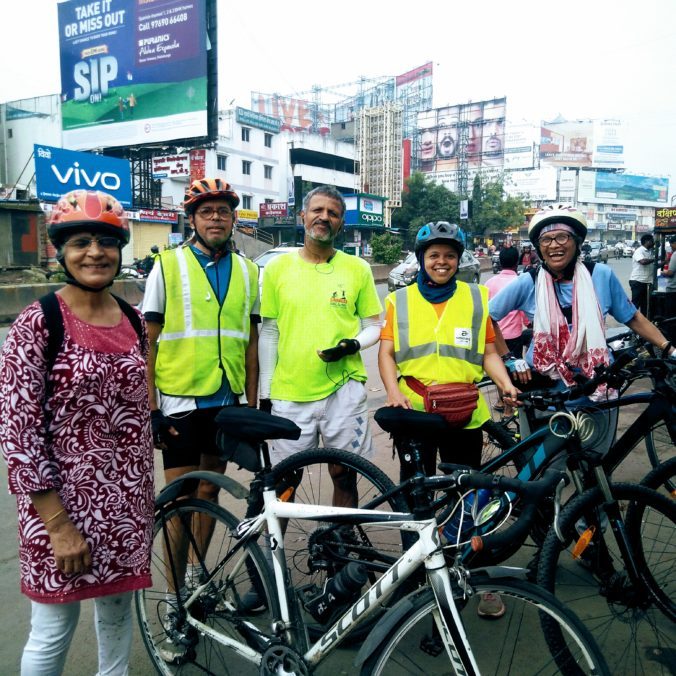
‘I want to bicycle from India to Hongkong to see my son’ shared Nirupama, a 71 years young bicyclist I met in Pune.

As lofty as her dream sounded to either of us, I was sure she would be on this dream trip very soon.
She had shared stories about her bicycle trips to Laddakh, Kanniyakumari among other places in India.
Having started bicycling after retiring from work at the age of 60, she kept on challenging herself and went past barriers even young adults wouldn’t dare dream to.

I saw the apprehension in her eyes while she shared her dream, wondering if she could go bicycling across countries to see her son.

I wanted to make her believe that she could do it.
I took out my phone and showed her a route she could take to reach Hongkong starting from Bangkok.

Her eyes lit up like a chiselled diamond.

And I am sure, as I write this, she’s busy back home, thinking of ways to make this trip happen.

What an inspiration she is !

This encounter reminded me of two other elderly friends I had met in Thailand.
One of them by the name of Phulong, 72, who wants to bicycle all around Thailand on his own.
I’m sure he’s biking around in some part of Thailand as I write this.

The other friend, Eugene, 72, an Irishman I had met at a hostel, wished to sail to India on his Yacht.
In fact, that what was he was going to start doing the moment he was back home.
Maybe he’s fixing up his Yacth as you’re reading this.

Meeting such ambitious and proactive elderly folk left me humbled.
I wondered how they could exist in such a state of being.

The answer I found was on the lines of their perception and interaction with two factors :

a) Time

b) Mindspace.

The elderly have only a decade
or so of life left to make something of. Yet, they have the a lot of time to reflect, imagine and think of ways to achieve a distant dream. The awareness of the finitude of their life only helps them to attribute more value to the little time they have on earth.

Also, the mindspace of ‘It is Now or Never’ is most obvious at their age. They are not afraid of anything that used to hold them back when they were young adults. They are in a position to imagine without inhibition.

I couldn’t help but draw a parallel between the relationship kids have with time and mindspace vis-a-vis the elderly.

While it is finitude that helps the elderly imagine and act without inhibition, it is the apparent infinitude, a timelessness in which the imaginative spirit of a child thrives.

A child has no fear of dreaming or acting on its dreams. If a child wants to be a doctor, he would just put a dummy stethoscope around it’s neck, wear the elder siblings oversized shirt and he’s ready to treat anyone and everyone in sight.
A child imagines and acts in the best of its capacity.

As young adults, what can we learn from the elderly and kids about ambition, imagination and taking action?

We live in an age where we have neither the time nor the mindspace to imagine and act on our dreams.
Aren’t most of us busy with something or the other that commands all of our immediate attention?

And sadly, we have become comfortable with devoting time to things that we are asked to do, without really thinking if it truly matters to us in the long run.

Part of the reason is because we dwell in the dangerous domain in our understanding of time,
in between finitude and infinitude.

If we really feel a sense of timelessness as kids, we would truly be present in each moment and be able to imagine the way we must.
At the same time, if we truly understand the finitude, the fragility of life, as the elderly do, we would, at all times, act responsibly and do things that matter to us.

Would it not be the best way to exist,
To live with complete understanding of our relationship with time and mindspace?
To understand finitude and infinity and let the wagon of our lives soar on the twin rails of imagination and action ?

If we choose to live with this awareness,
Could life ever be little?
« Older posts Newer posts »